
Access panel locks suited to the demands of your healthcare setting.

Give your team straightforward access to building services and confidence that panels are firmly secured afterwards.

Contour Secure’s tamper-resistant access panel locks combine compression, visual position indicators and a removable key, helping you specify a closure around the needs of the environment.

The panel provides access. The lock needs to control it.

Access panels allow your team to inspect, maintain and repair the services behind walls and ceilings.

But a panel supplied with a basic budget lock may not provide the closure your setting needs.

A protruding fitting, unwanted movement or a lock that is easily interfered with can leave your team questioning whether the installation is suitable.

You need authorised staff to reach the services without leaving an access point that creates avoidable concerns between maintenance visits.

A low purchase price can leave more to manage after installation.

Access panels are often selected as a small part of a much larger project. The supplied lock can receive less attention than the panel’s size, finish or location.

Yet it is the component your team relies on to keep the panel secured.

If that lock proves unsuitable, staff may need to investigate loose closures, replace damaged fittings or revisit panels that do not stay firmly in position.

A panel that fits the opening still needs a locking arrangement suited to its intended use.

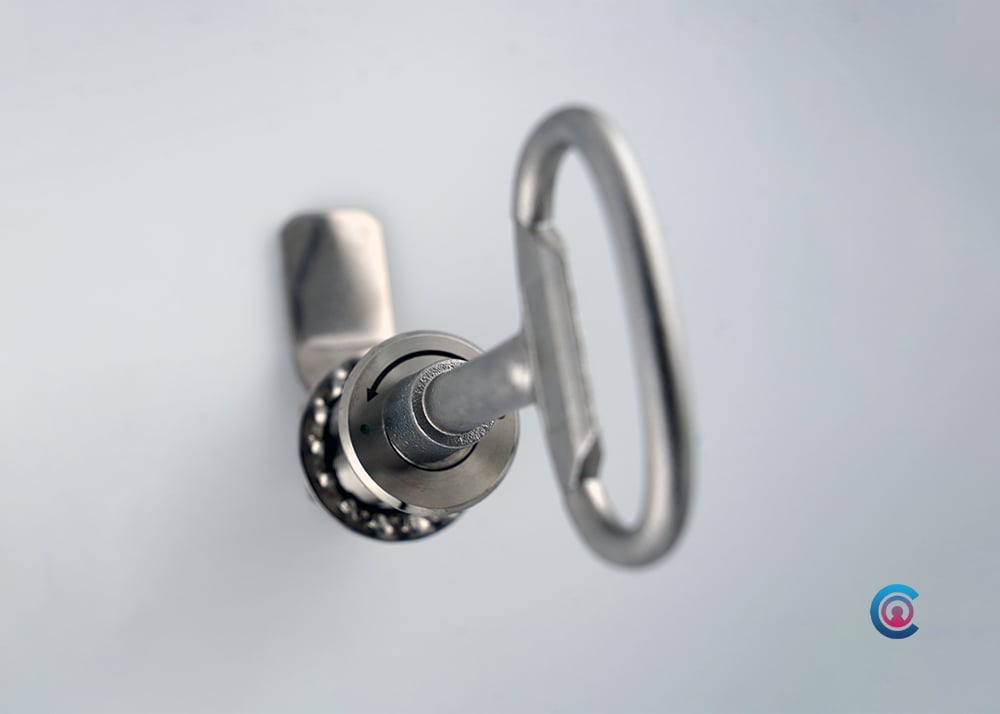
Key turning a Contour Secure lock

Finish the work knowing the panel is properly secured.


Picture your team completing an inspection, returning the access panel to position and securing each locking point.

The compression action draws the panel firmly against its frame. Staff check the visual indicators, confirm the lock position and move on to the next task.

When access is needed again, the appropriate key releases the locks in sequence.

  • Straightforward maintenance access.
  • Less unwanted movement.
  • Greater confidence in the closure between visits.

Choose access panel locks around the job they need to do.

Compression that holds the panel firmly closed.

The cam engages behind the frame, then the compression mechanism draws the panel firmly against it, taking up fitting clearance at the locking point.

Where a loose fit allows the panel to move, draughts through service voids can cause rattling and unnecessary disturbance to patients.

By clamping the panel against its frame, compression helps prevent movement and rattling caused by that clearance, supporting a quieter care environment.

A flush face that reduces protruding features.

The low-profile lock face sits flush with the panel surface, reducing exposed features that could provide opportunities for interference.

Its smooth finish also supports straightforward cleaning in healthcare settings.

Tamper-resistant operation.

The lock is designed to restrict operation to staff with the appropriate key, helping protect access to the services behind the panel.

Suitability is assessed around the complete installation and the demands of its location.

One key for multiple locking points.

Retained-key locks hold the key while unlocked, providing a cue that the locking process is incomplete. On a panel with several locks, however, that can mean needing several keys to open it.

Contour Secure’s key can be removed in both positions. Staff can unlock each compatible fixing in turn using one key.

Visual indicators for the final check.

Key removal alone does not show whether the lock is secured.

After closing the panel, staff operate each lock and check that its two red indicators align in the locked position, providing a visible reference during the final securing process.

Assess the whole panel, not just the supplied lock.

A secure closure depends on the panel, frame, fixings and lock working together.

Contour Secure helps you review the aperture, clearances, cam engagement and configuration needed for your installation. Samples allow the proposed arrangement to be checked before wider supply.

Good to know

Compression addresses clearance at the locking point. It cannot correct an unsuitable panel or poorly fitting frame.

Where a panel has fire, acoustic or other performance requirements, any proposed lock change also needs to be assessed against the relevant product evidence.

Three steps towards a suitable locking arrangement.

Step 1

Show us the installation.

Share photographs of your existing access panels and locks, or drawings for a proposed design.

Explain where the panels are installed, what services they protect and any concerns about damage, movement or unauthorised access.

Step 2

Review and test the fit.

We assess compatibility and identify a suitable configuration, using surveys, drawings and samples as required.

Evaluate the closure, key operation and visual indicators alongside the panel’s wider requirements.

Step 3

Put the agreed arrangement into use.

Once approved, we supply the locks for the agreed scope and support the relevant retrofit or manufacturer integration process.

Upgrade suitable panels or set the requirement before installation.

Improve existing access panels.

Where the panel and frame remain suitable, replacing the lock may improve security and operation without replacing the complete installation.

Specify the closure your setting needs.

For new panels, establish the locking requirement early. We work with the manufacturer to assess integration and agree the appropriate configuration before supply.

Contour Secure tamper-resistant cam lock

Damaged lock. Serviceable access panel.

If a lock has been damaged but the panel remains in good condition, a compatible replacement can provide a straightforward repair, restoring a firm closure while retaining the existing panel.

Make the locking decision part of a fit-for-purpose installation.

Whether you are reviewing a basic supplied lock, addressing damage or specifying new access panels, start with what the installation needs to achieve.

Show us the panel and explain the demands of its setting. We will help you assess a locking arrangement that supports practical maintenance access and secure closure.

Call 01952 890158 or email sales@contoursecure.co.uk.